Vortex Tungsten Carbide Burrs

Carbide Burrs by Application

Most burr charts start with the shape. That is the wrong end of the problem — you know the job, not the letter. Start with what you are trying to do, and the shape and cut follow.

13 head shapes (Types A to N), three cut styles, 3mm to 16mm head diameter on 3mm and 6mm shanks. All UK stock.

Step 1

Shop by the job

Five things a burr is normally bought to do. Pick the one that matches the part in front of you, then choose a cut style in step 2.

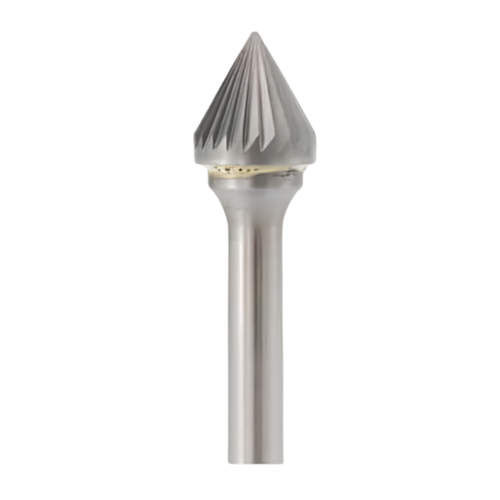
Vortex Carbide Burr Type K - 90º Countersink - Single Cut - 6mm Diameter

Job 01

Deburring drilled holes and chamfering entries

The burr thrown up at a drilled hole entry comes off in one pass with a countersink-form head. Type K cuts a 90° included angle, which matches the seat of a standard countersunk screw. Type J is narrower, for a lighter break-edge where you do not want to open the hole out. Both are stocked in single cut only, 6mm to 16mm head on a 6mm shank. A cone (Type M) does the same job where you need a steeper angle or a smaller entry.

Shop the shapes for this job

Vortex Carbide Burr Type N - Inverted Cone - Single Cut - 3mm Diameter

Job 02

Deburring back faces, bores and cross holes

An inverted cone is narrow at the shank and wide at the tip, so it passes through a hole and cuts on the way back out. That is what makes it the tool for a back-face burr, a counterbore edge or a cross-hole intersection you cannot see or reach with a hand scraper. The flat top lets you clean an internal corner square without rolling the edge over.

Shop the shapes for this job

Vortex Carbide Burr Type B - Cylinder With End Cut - Single Cut - 3mm Diameter

Job 03

Opening out holes, truing slots and flat faces

Cylindrical burrs cut on the flank, so they straighten a wall rather than dig into it. The difference between the two types matters: Type A has no end teeth, so it only cuts sideways — use it when the floor of a pocket or the bottom of a slot must not be touched. Type B has an end cut, so it can plunge in and then traverse, which saves starting the cut from an edge.

Shop the shapes for this job

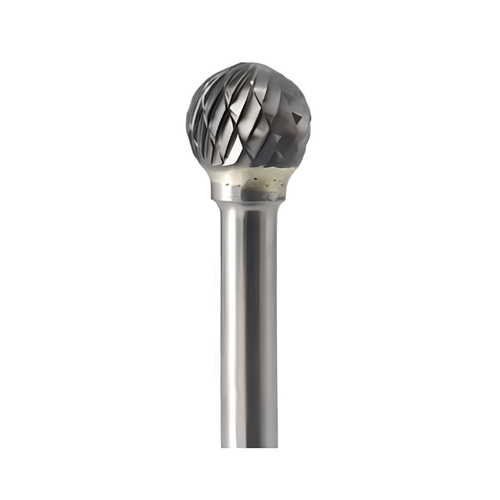
Vortex Carbide Burr Type D - Ball Nose - Double Cut - 3mm Diameter

Job 04

Blending contours, radii and curved faces

Round-ended shapes follow a curve without leaving a facet. A ball (Type D) drops into a concave radius and works in any direction. An oval (Type E) covers more surface per pass on a gentle sweep, so it is faster over a large blend. A ball nose cylinder (Type C) takes a radius into a straight wall in one setup. A ball nose cone (Type L) does the same where the approach angle is tight and a cylinder would foul the part.

Shop the shapes for this job

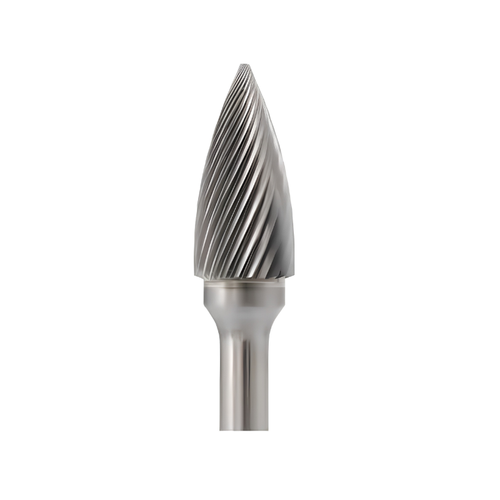
Vortex Carbide Burr Type G - Pointed Tree - Single Cut - 6mm Diameter

Job 05

Reaching into corners, slots and tight profiles

When access is the problem rather than the material, a tapered head puts the cutting edge where you need it without the shank fouling the part. A pointed tree (Type G) reaches the bottom of a sharp internal corner. A ball nose tree (Type F) does the same work without leaving a witness mark from the point. A flame (Type H) suits a long, shallow blend along a profile. A cone (Type M) opens out an angled seat.

Shop the shapes for this job

Step 2

Shop by material and cut

The shape decides where the burr can reach. The cut decides how it behaves in the material. Getting this wrong is the usual reason a burr stops cutting or leaves a poor finish.

Vortex carbide burr cut styles compared
CutWhat it isBehaviourBest for
Single cut One set of helical flutes, widely spaced teeth Each tooth takes a bigger bite. Fast removal, coarser finish, long stringy chips Steel, stainless and cast iron where you have material to shift
Double cut A second set of flutes crossed over the first (also called cross cut or diamond cut) Smaller chips, less grab, more control by hand, finer finish The default choice for steel, stainless and most hand-held deburring
Aluminium cut Fewer, deeper, more open gullets Soft swarf clears itself instead of packing into the flutes Aluminium, brass, copper, bronze and plastics
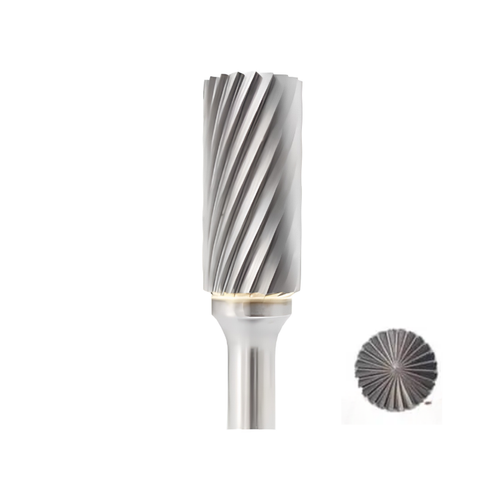
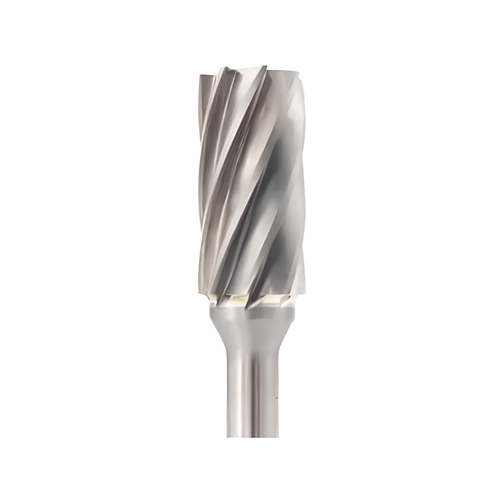
Vortex Carbide Burr Type A - Cylinder Without End Cut - Aluminium Cut - 6mm Diameter

Aluminium cut

Aluminium, brass, copper and plastics

Soft, gummy material packs the gullets of a standard burr within seconds and the tool stops cutting — it starts rubbing and smearing instead. Aluminium cut has fewer, deeper flutes with far more space between the teeth, so the swarf throws clear on its own. Stocked in Types A, B, C, D, F and L, 6mm to 16mm head.

Not stocked in aluminium cut: Types E, G, H, J, K, M and N. On those shapes, single cut is the closer substitute for non-ferrous work.

Shop aluminium cut

Vortex Carbide Burr Type D - Ball Nose - Double Cut - 3mm Diameter

Double cut

Steel and stainless — controlled cut, better finish

The crossed second flute breaks the chip into small pieces instead of long strings. That stops the burr grabbing and snatching in a hand-held die grinder, and it leaves a finish that usually needs no further work. If you are deburring by hand on steel or stainless and are not sure which to buy, buy double cut. Stocked in every shape except Types J and K.

Shop double cut

Vortex Carbide Burr Type M - Cone - Single Cut - 3mm Diameter

Single cut

Steel and cast iron — fast stock removal

Wider tooth spacing means each tooth takes a heavier bite, so material comes off noticeably faster. The trade is a coarser finish and long chips that need clearing. Use single cut when there is weld, flash or casting material to remove and the surface will be worked again afterwards. Stocked in all thirteen shapes, Types A to N.

Shop single cut

Step 3

Shank and head sizes we stock

Check the collet or chuck on your die grinder before ordering. Every Vortex burr in this range runs on one of two shank diameters.

Vortex carbide burr shank and head sizes
ShankHead diametersOverall lengthTypical use
3mm 3mm and 4mm 38mm Micro deburring, small bores, tight internal corners, pencil grinders
6mm 6, 8, 10, 12 and 16mm 50mm to 81mm depending on head length General shop deburring and stock removal in a standard 6mm die grinder collet

Head length varies with shape as well as diameter — a 16mm flame is 36mm long in the head, a 16mm ball is 14mm. Each product page lists head diameter, shank diameter, head length and overall length in the specification.

Carbide burr questions

Which carbide burr should I use on aluminium?

Use an aluminium cut burr. Aluminium, brass, copper and most plastics are soft enough to weld themselves into the flutes of a standard single or double cut burr, and once the gullets pack the tool stops cutting and starts rubbing — you get heat, smearing and a ruined surface rather than swarf. Aluminium cut has fewer, deeper flutes with much wider spacing so the chip clears itself. Protool stocks aluminium cut in Types A, B, C, D, F and L from 6mm to 16mm head diameter. If you need a shape we do not stock in aluminium cut — oval, tree, flame, countersink, cone or inverted cone — single cut is the closer substitute, because its wider tooth spacing clogs less readily than double cut, but expect to clear the flutes more often.

What is the difference between single cut, double cut and aluminium cut?

It is the flute geometry, and it changes how the burr behaves rather than what it is made from — all three are the same tungsten carbide. Single cut has one set of helical flutes with widely spaced teeth, so each tooth takes a heavier bite: material comes off fast, the finish is coarser and the chips come off long and stringy. Double cut adds a second set of flutes crossed over the first, which breaks those chips into small pieces. That makes the tool far less likely to grab in a hand-held grinder, gives you more control and leaves a finer finish, which is why double cut is the usual choice for hand deburring on steel and stainless. Aluminium cut is a specialist form with fewer, deeper and more open gullets, made to stop soft gummy swarf from packing in. Choose single cut for speed, double cut for finish and control, aluminium cut for non-ferrous.

Which carbide burr shape do I need?

Work back from the feature you are cutting. For a hole entry chamfer, use a countersink form — Type K for a 90° included angle, Type J for a narrower one. For a burr on the back face of a hole or a cross-hole intersection, use an inverted cone (Type N), which cuts as you draw it back out. To open out or straighten a hole or slot, use a cylinder: Type A cuts only on the flank, Type B has end teeth and can plunge. To blend a radius or a curved face, use a ball (Type D), oval (Type E), ball nose cylinder (Type C) or ball nose cone (Type L). To reach into a corner or a tight profile, use a pointed tree (Type G), ball nose tree (Type F), flame (Type H) or cone (Type M). Protool stocks all thirteen shapes, Types A through N — there is no Type I in the standard series.

What shank sizes do these carbide burrs come in?

Two: 3mm and 6mm. The 3mm shank carries the 3mm and 4mm heads and is 38mm overall, which suits a pencil grinder or a micro die grinder for small bores and tight internal corners. The 6mm shank carries the 6, 8, 10, 12 and 16mm heads and runs from 50mm to 81mm overall depending on how long the head is. 6mm is the standard collet size on most workshop die grinders in the UK, so it covers the majority of jobs. If your grinder takes 1/4in (6.35mm) collets, a 6mm burr will not run true in it — check the collet size rather than assuming, because the two are close enough to look interchangeable and are not.

How do I deburr the back of a hole or a cross-hole I cannot see?

Use an inverted cone burr (Type N). It is narrow at the shank end and wide at the tip, so you pass it through the hole, tip it against the far face and cut on the withdrawal stroke. That reaches a back-face burr that no hand scraper will get to. The same geometry works for the intersection where a cross hole breaks into a bore, which is one of the hardest burrs to remove in a machined part — the flat top face of the cone lets you clean the intersection square rather than rolling the edge over into the bore. Protool stocks Type N in single and double cut, 3mm to 16mm head. For heavier access through a small hole, a 3mm head on a 3mm shank will pass through a hole a 6mm head will not.

Can I use a carbide burr in a drill instead of a die grinder?

You can, but it will not work well and it wears the tool quickly. Carbide burrs are designed to run at die grinder speeds — tens of thousands of rpm — where the cutting edge shears the material cleanly. A mains or cordless drill tops out an order of magnitude lower, so the teeth rub and chip instead of cutting, the burr loads up, and you push harder to compensate, which is how burrs get snapped. A drill chuck also holds a 6mm shank far less concentrically than a collet, so the head runs out and chatters. If a drill is genuinely all you have, take very light passes, keep the burr moving and expect a short tool life. For occasional hand deburring on drilled holes, a hand deburring tool or a countersink is the better answer.

Do you sell carbide burr sets?

No — Vortex carbide burrs are stocked and sold individually, not in boxed sets. In practice that works out better for a working shop: sets are priced around a spread of shapes you may never touch, and when you wear out the one shape you actually use you are buying the whole set again. Buying singles means you can stock two or three of the shape and cut you use every week and replace exactly that. If you want a starting spread for a general workshop, a 6mm double cut ball (Type D), a 6mm double cut cylinder with end cut (Type B) and a 10mm single cut 90° countersink (Type K) will cover most day-to-day deburring. All items are held in UK stock.

Not sure which burr fits the job?

Our technical team works with aerospace, motorsport and precision engineering shops every day. Send us the feature you are trying to deburr and we will tell you what we would reach for.